A Complete Guide to Industrial Equipment Financing for Businesses
Industrial equipment plays a vital role in manufacturing, construction, logistics, agriculture, mining, healthcare, and many other industries. Modern machinery helps businesses improve productivity, maintain quality standards, and support long-term operational growth. However, acquiring industrial equipment often requires careful financial planning because machinery represents a significant business investment.
Industrial equipment financing refers to financial arrangements that help businesses acquire machinery and equipment while managing cash flow over time. Rather than paying the entire amount immediately, businesses may use structured financing methods that align with their operational needs and financial planning.
As industries continue adopting automation, digital manufacturing, and energy-efficient technologies, understanding industrial equipment financing has become increasingly important for organizations of every size. This guide explains the fundamentals, current trends, regulations, useful resources, and frequently asked questions in a simple and educational manner.
Understanding Industrial Equipment Financing
Industrial equipment financing is a business financing method designed to support the acquisition of machinery, production systems, industrial vehicles, warehouse equipment, and specialized technology used in commercial operations.
Equipment commonly associated with financing includes:
- Manufacturing machines
- CNC equipment
- Construction machinery
- Agricultural equipment
- Industrial robots
- Packaging machinery
- Medical equipment
- Material handling systems
- Forklifts and warehouse equipment
- Renewable energy equipment
Financing exists because industrial equipment typically has a long operational lifespan and contributes to business productivity over many years. Spreading payments over time allows organizations to better align equipment usage with financial planning.
Many financing structures also consider equipment value, expected lifespan, maintenance requirements, and depreciation schedules.
Common Types of Industrial Equipment Financing
| Financing Type | Typical Purpose | Suitable For |
|---|---|---|
| Equipment Loan | Ownership after repayment | Long-term machinery use |
| Equipment Lease | Equipment usage without immediate ownership | Frequently upgraded equipment |
| Asset-Based Financing | Uses equipment as collateral | Capital management |
| Vendor Financing | Manufacturer-supported financing programs | New equipment acquisition |
| Government-Supported Financing | Programs supported by development institutions | Eligible businesses and industries |
Different financing methods are selected based on equipment type, business objectives, financial planning, and industry requirements.
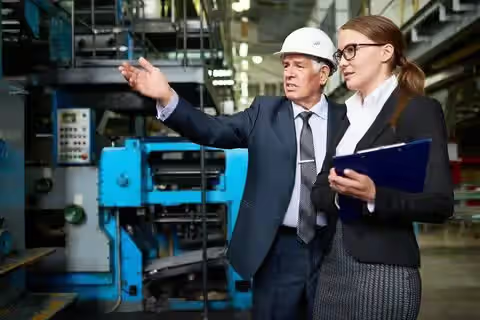
Why Industrial Equipment Financing Matters
Industrial sectors continue to invest in advanced machinery to improve production quality, workplace safety, and operational efficiency. Financing plays an important role in making these investments manageable within business planning.
Several industries benefit from industrial equipment financing, including:
- Manufacturing
- Construction
- Agriculture
- Food processing
- Warehousing
- Transportation
- Healthcare
- Energy
- Mining
- Recycling
Businesses often balance multiple operational priorities, including payroll, inventory management, infrastructure improvements, technology upgrades, and expansion projects. Equipment financing helps organizations allocate financial resources across these priorities more effectively.
Key Benefits
Some important advantages include:
- Better cash flow management
- Access to modern industrial technology
- Support for equipment modernization
- Improved operational efficiency
- Easier planning for long-term capital investments
- Reduced pressure on working capital
- Predictable repayment schedules
Challenges Businesses Often Face
Industrial equipment financing also helps address several common business challenges.
These include:
- Large upfront equipment investment
- Rapid technological advancement
- Equipment replacement planning
- Capacity expansion
- Production modernization
- Asset lifecycle management
As industries become increasingly automated, equipment financing has become part of broader capital investment strategies rather than simply a purchasing decision.
Industries Most Affected
| Industry | Equipment Examples |
|---|---|
| Manufacturing | CNC machines, robotics, production lines |
| Construction | Excavators, loaders, cranes |
| Agriculture | Tractors, harvesters, irrigation systems |
| Logistics | Forklifts, conveyors, warehouse automation |
| Healthcare | Diagnostic imaging equipment |
| Food Processing | Packaging and processing machinery |
| Renewable Energy | Solar manufacturing equipment and industrial batteries |
Recent Updates and Industry Trends
Industrial equipment financing continues to evolve alongside changes in manufacturing technology, sustainability initiatives, and digital transformation.
During 2025 and early 2026, several important trends have influenced equipment financing across global markets.
Growth of Smart Manufacturing
Manufacturers increasingly invest in:
- Industrial Internet of Things (IIoT)
- Smart sensors
- Connected production equipment
- Artificial intelligence monitoring
- Predictive maintenance systems
These technologies improve equipment performance while generating operational data that supports long-term asset management.
Automation Investments Continue
Many industrial sectors continue expanding automation projects to improve efficiency and reduce production downtime.
Common investments include:
- Robotic production systems
- Automated storage solutions
- Smart warehouse equipment
- Digital manufacturing platforms
Sustainability-Focused Equipment
Environmental goals have encouraged investment in:
- Energy-efficient machinery
- Low-emission industrial equipment
- Electric industrial vehicles
- Sustainable manufacturing technologies
Many countries continue supporting environmentally responsible industrial modernization through various economic development initiatives.
Digital Financing Platforms
Financial institutions increasingly use digital platforms that allow businesses to:
- Submit applications online
- Upload financial documents securely
- Track financing progress
- Review repayment schedules digitally
Digital workflows have simplified documentation and improved transparency throughout financing processes.
Data-Driven Risk Assessment
Recent financial technology developments increasingly use business data analytics to assess equipment financing applications more efficiently while maintaining responsible lending practices.
Laws and Policies Affecting Industrial Equipment Financing
Industrial equipment financing operates within financial regulations that protect both financial institutions and businesses.
Although regulations differ between countries, several common policy areas influence equipment financing.
Financial Compliance
Businesses generally need to maintain:
- Accurate financial reporting
- Proper accounting records
- Tax documentation
- Business registration compliance
- Asset documentation
These records help support financing evaluations and ongoing regulatory compliance.
Accounting Standards
Businesses often follow recognized accounting standards regarding:
- Equipment depreciation
- Asset recognition
- Lease accounting
- Financial reporting
Accounting treatment varies depending on financing structure and applicable accounting standards.
Tax Policies
Many countries establish rules covering:
- Equipment depreciation schedules
- Capital allowance programs
- Investment deductions
- Business asset reporting
Tax regulations differ by jurisdiction and should always follow applicable government guidance.
Government Development Programs
Several governments continue supporting industrial modernization through programs focused on:
- Manufacturing productivity
- Digital transformation
- Small business development
- Clean energy adoption
- Innovation initiatives
Eligibility depends on country-specific policies and program requirements.
Environmental Regulations
Environmental standards increasingly influence industrial equipment investments through requirements involving:
- Energy efficiency
- Emissions reduction
- Workplace safety
- Waste management
- Sustainable manufacturing
Businesses often evaluate equipment financing alongside environmental compliance planning.
Helpful Tools and Resources
Several educational resources help businesses better understand industrial equipment financing and financial planning.
| Resource | Purpose |
|---|---|
| Equipment Financing Calculator | Estimate repayment schedules |
| Loan Amortization Calculator | Understand payment structures |
| Depreciation Calculator | Estimate equipment depreciation |
| Cash Flow Forecast Template | Plan future business finances |
| Capital Budgeting Worksheet | Compare equipment investment options |
| Financial Ratio Calculator | Evaluate business financial health |
| Business Plan Template | Prepare financing documentation |
| Equipment Lifecycle Planning Template | Manage long-term equipment replacement |
Useful online resources include:
- Government small business portals
- Manufacturing association publications
- Central bank financial education resources
- Accounting standards organizations
- Business development agencies
- Financial literacy websites
- Industrial equipment research reports
- Economic development institutions
Example Equipment Financing Planning Process
| Stage | Purpose |
|---|---|
| Business Needs Assessment | Identify operational requirements |
| Equipment Evaluation | Compare technical specifications |
| Financial Analysis | Review cash flow and budgeting |
| Documentation Preparation | Organize financial records |
| Financing Evaluation | Compare available financing structures |
| Equipment Deployment | Install and begin operations |
| Ongoing Asset Management | Monitor equipment performance |
This structured approach helps businesses make informed financial decisions while aligning equipment investments with long-term operational objectives.
Frequently Asked Questions
What is industrial equipment financing?
Industrial equipment financing is a financial arrangement that enables businesses to acquire industrial machinery through structured payment methods instead of making a full upfront payment. It is commonly used for manufacturing, construction, agricultural, logistics, and industrial equipment.
Which industries commonly use industrial equipment financing?
Industries such as manufacturing, construction, agriculture, healthcare, transportation, warehousing, mining, renewable energy, and food processing frequently use equipment financing because they depend on specialized machinery for daily operations.
What factors influence equipment financing decisions?
Common considerations include equipment lifespan, business financial performance, expected equipment productivity, maintenance requirements, depreciation, cash flow planning, and overall investment strategy.
Are government programs available for industrial equipment financing?
Many countries provide business development initiatives, manufacturing modernization programs, or sustainability incentives that may support equipment investments. Eligibility depends on local government policies and specific program requirements.
Why has industrial equipment financing become more important?
Growing investments in automation, smart manufacturing, digital technologies, and sustainable industrial equipment have increased the need for structured financing solutions that support long-term business planning while maintaining operational flexibility.
Conclusion
Industrial equipment financing has become an essential part of modern business planning as organizations continue investing in advanced machinery, automation, and sustainable technologies. Rather than focusing only on equipment acquisition, businesses increasingly view financing as a strategic tool for supporting productivity, improving operational efficiency, and managing long-term capital investments.
Recent developments in digital financing platforms, smart manufacturing, and environmentally responsible equipment have further expanded the importance of understanding financing options. At the same time, financial regulations, accounting standards, and government development programs continue shaping how businesses approach equipment investment decisions.
By understanding financing structures, industry trends, regulatory considerations, and available planning resources, businesses can make informed decisions that align equipment investments with operational goals and financial sustainability.

Related Post...
A Complete Guide to Industrial Equipment Financing for Businesses
Updated: August 14, 2026
Read More
Medical Billing Software Comparison: Features, Costs, and Hidden Tradeoffs
Updated: August 12, 2026
Read More
Industrial Chemicals Overview: How They Support Modern Industries
Updated: August 27, 2026
Read More